

Welcome to the Energy Diaries Customer Tracker. Twice a year, we poll over 2,000 UK consumers to understand their attitudes around a whole host of energy-related issues. Now, for the first time, we are publishing key parts of this data in a new dashboard so others can benefit from the insight gathered.
As we transport gas to 11 million customers and serve the needs of some of the busiest cities in the country, it is imperative that we understand the views of the communities we support. In the last five years, energy has impacted people’s lives more than any proceeding period. The constant changes in the geopolitical landscape means more than ever energy is impacting daily life.
We know that customers care about sustainability but feel the tension with affordability. To unearth their views further, we ask a series of questions to understand how people feel about living sustainably. Here, we’ve seen several sentiment shifts.
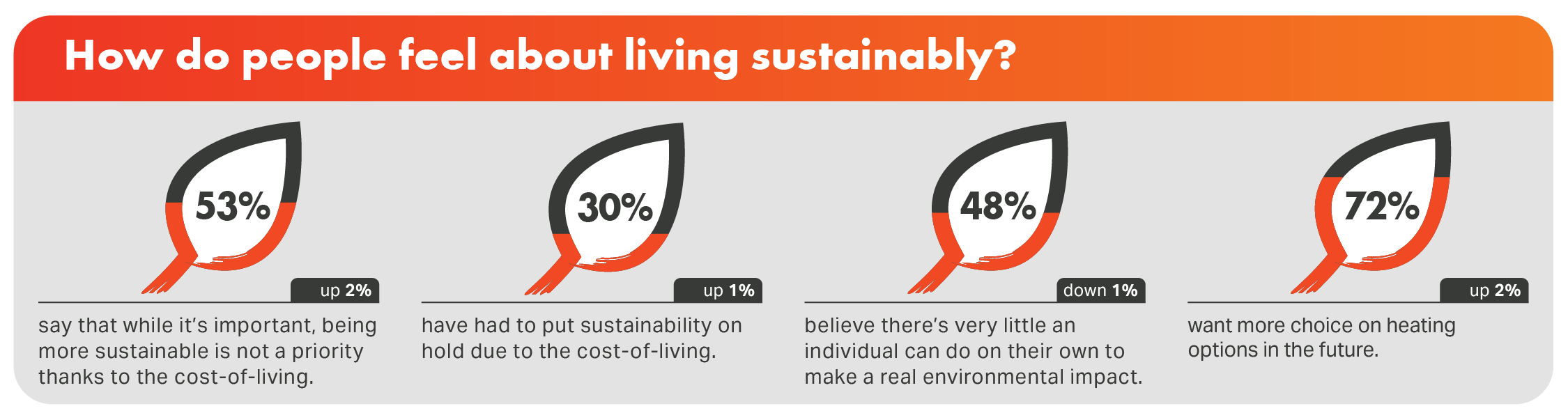
Over half (53%) of those we surveyed say that while it’s important to be sustainable, it is currently not a priority due to the cost-of-living. This is a slight increase on September 2025. Moreover, almost one in three (30%) have had to put sustainability on hold due to the cost-of-living. It’s worth noting that this research was undertaken in the summer, when sustainability is often front of mind. Seeing the variability in response across those who participate in the surveys allows us to understand if all people are being given the opportunity to participate in a sustainable energy system. Going forward, as the industry unites with policymakers, it is important to use metrics like these to see if progress is being made across the industry to help more people make sustainable lifestyle choices.
Customers are the gatekeepers of adopting change. Affordability may limit the choices they make, but we also need to ensure that the industry offers solutions that meet their needs and lifestyles. Almost three-quarters of our respondents (72%) say they want more choice on their heating options in the future, compared to what is currently available to them.
To understand affordability more, we need to look at how the public feel about their energy bills.
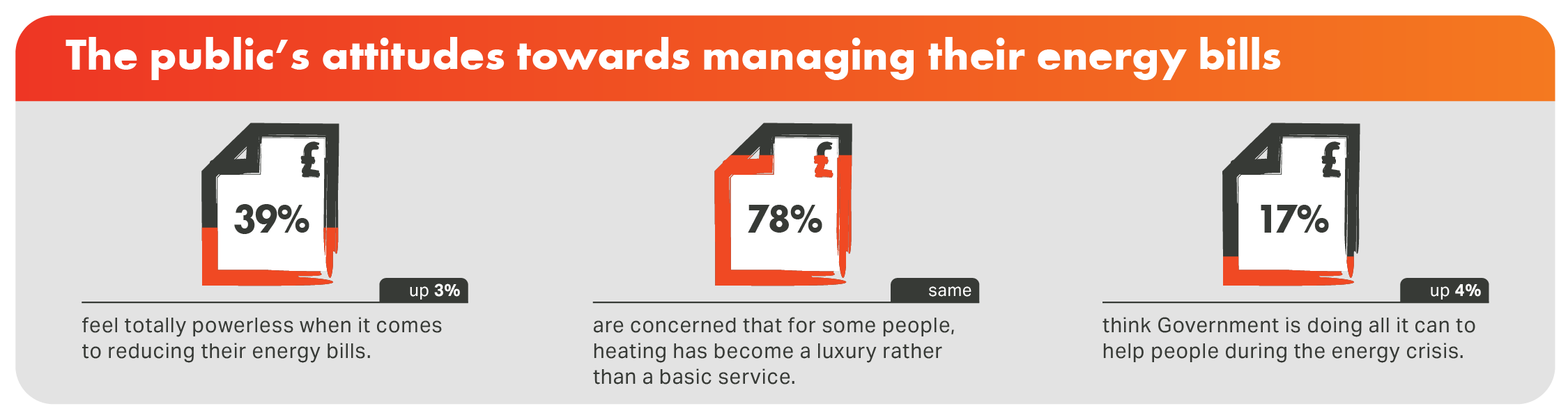
Two in five (39%) say they feel totally powerless when it comes to reducing their energy bills, while a staggering almost four in five (78%) are concerned that, for some people, heating has become a luxury rather than a basic service. A trend that is concerning as we approach winter.
An encouraging sign for the current UK government, however, is that there has been slight growth in confidence that it is doing all it can to help people manage their energy– up four per cent to 17 per cent. Customers also want to see the energy industry do more and particularly to support customers in vulnerable situations.
Bill anxiety has been something the industry has discussed for many years.
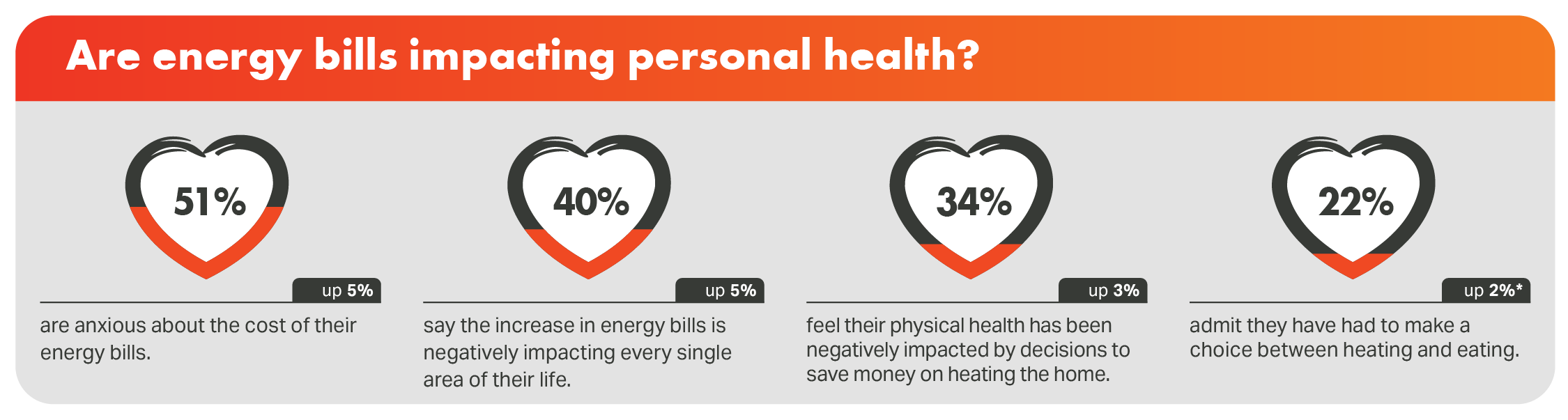
However, as we are in unprecedented times, it is important to take note that over half (51%) of respondents say they are really anxious about the cost of their energy bills. Although this is not at the heights we saw in August 2022, where nearly three quarters of people felt this way, some people have been living with this anxiety and constant cost pressure since the start of the cost-of-living crisis. Additionally, two in five say the increase in energy bills is negatively impacting every single area of their life. Both show a five per cent increase from 2025.
Over one third (34%) feel their physical health has been negatively impacted by decisions to save money, while just over one in five (22%) admit they have had to choose between heating and eating. Once again, this shows the link between energy and lifestyle decisions.
With forecasters predicting a difficult winter, Cadent supports schemes that ensures we safeguard the most vulnerable in society, with our insights used to ensure this support reaches those who need it most. This includes programmes under the Vulnerability and Carbon Monoxide Allowance (VCMA) and grants provided to speciality charities through the Cadent Foundation
As aforementioned, it is important customers are able to make choices on heating options. We therefore aim to take the barrier of affordability away by asking how they would spend £7,500 with respect to energy (equivalent to the current heat pump subsidy). The most common answer remains paying energy bills.
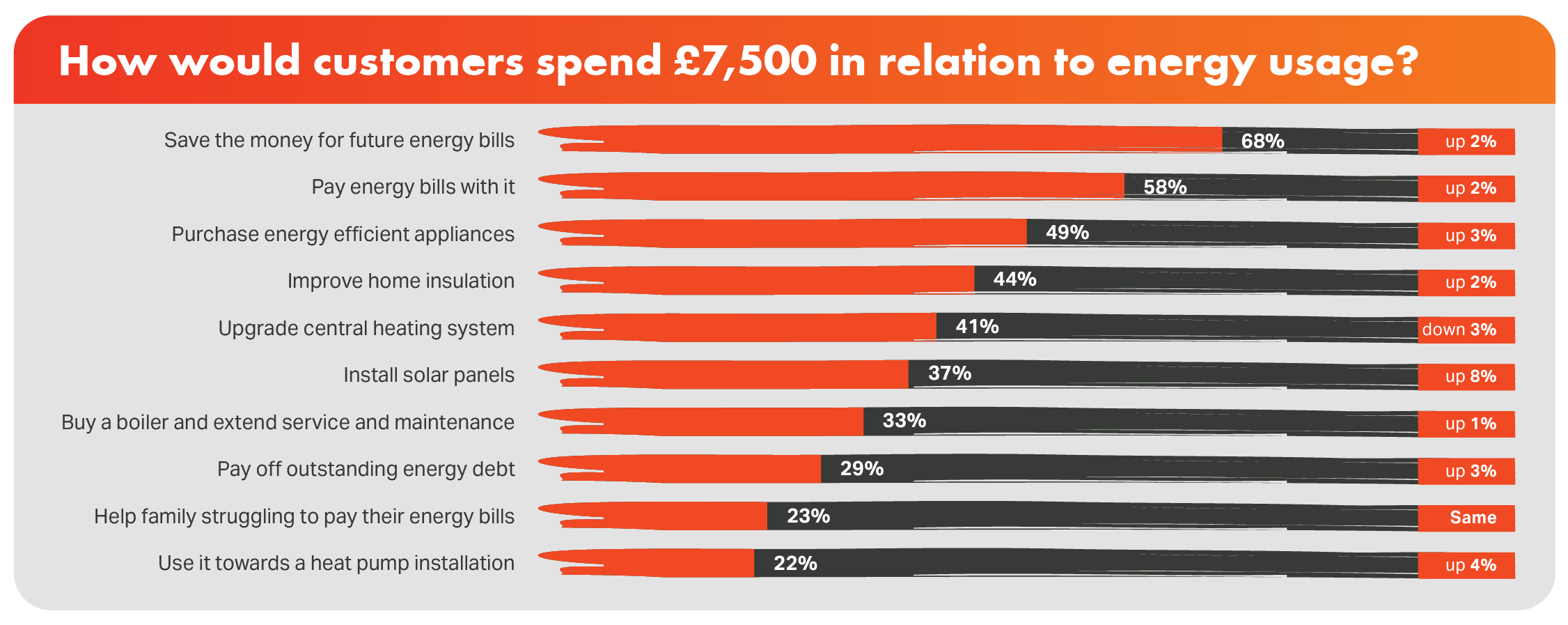
More than two-thirds of people (68%) would save the money for future energy bills, while 58 per cent would use it to pay existing bills.
However, that drive to make sustainable lifestyle choices is evident, with 37 per cent of respondents showing interest in investing the money in solar panels, up eight percentage points. This is likely influenced by the summer timing of the survey.
Customers don’t always differentiate between Cadent’s role in the energy system and others, such as the retailers, who create the tariffs. That’s why we extensively gather customer insights to understand the context energy and heating bills has on our customers, to ensure Cadent can develop its plans to best support communities. Doing our part in the energy landscape.
The energy transition is going to be a continued debate among policymakers. Our summer customer tracker suggests that the transition will succeed when customers see a route that works for their home, their finances, their future and their family. That means listening first, designing around real lives and keeping multiple pathways open.
The Energy Diaries customer tracker has been a long-standing insights programme by Cadent. Many of our partners, collaborators and stakeholders have been involved over a five-year period and they have told us that they value the insight. Twice a year, we will publish the Energy Diaries Customer Tracker, with the next iteration released in the winter.
To read more, and find all of our previous Energy Diaries studies, click here.
To read more about the future of the gas network, visit here.
Cadent is the UK’s largest gas distribution network with a 200-year legacy. We are in a unique position to build on strong foundations whilst encouraging the curiosity to think differently and the courage to embrace change. Day to day we continue to operate, maintain and innovate the UK’s largest gas network, transporting gas safely and protecting people in an emergency. Our skilled engineers and specialists remain committed to the communities we serve, working day and night to ensure gas reaches 11 million homes from Cumbria to North London and the Welsh Borders to East Anglia, to keep your energy flowing.
Here at Cadent we support the Government’s plans to reach Net Zero by 2050. That means we’re backing the introduction of hydrogen as a low carbon alternative to natural gas for the future. We know people love the controllability of gas and, with our network already in place, it makes sense to switch to the lower carbon alternative offered by hydrogen, which we believe can keep homes and businesses warm for generations to come.
Cadent manages the national gas emergency service free phone line on behalf of the gas industry - 0800 111 999*
Cadent Gas Ltd is owned by a consortium of global investors.
*All calls are recorded and may be monitored.

Working with Thinks Insight & Strategy, this report explores how cultural background – including ethnicity and religion – shapes attitudes to heating and cooking, focusing on the unique needs and preferences faced by different communities in relation to gas.
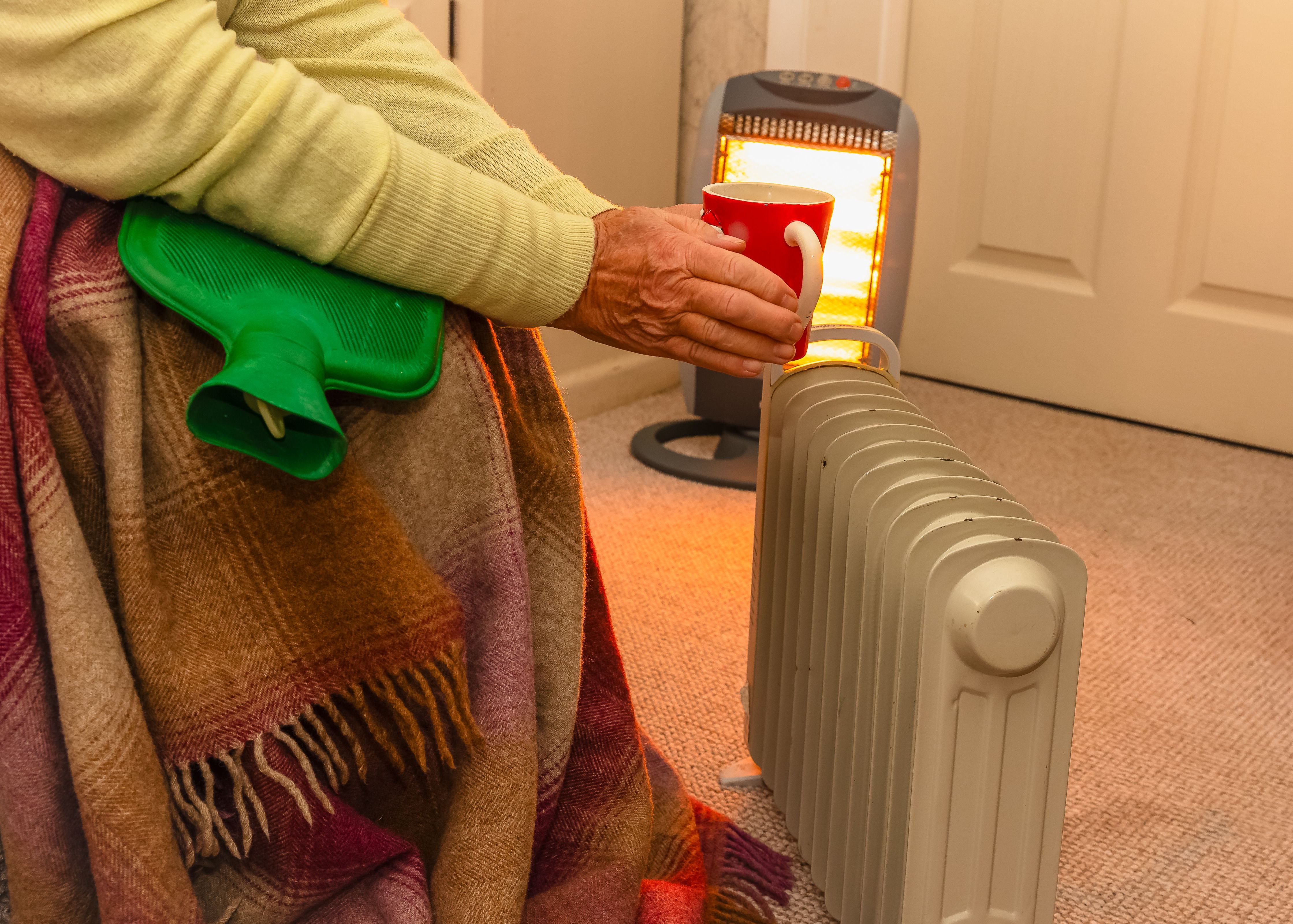
Fuel poverty persists long after winter ends. We’re expanding our Centres for Warmth to ensure vulnerable customers stay safe, warm and supported year-round.

We’re working with partners to support vulnerable households in fuel poverty — providing warmth, safety and essential services to those who need them most.
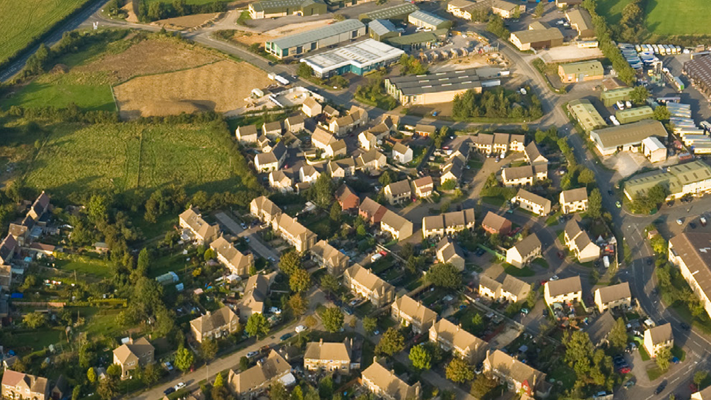
As we look ahead to our next regulatory period, we’re pleased to share our insights into consumer views and trends.
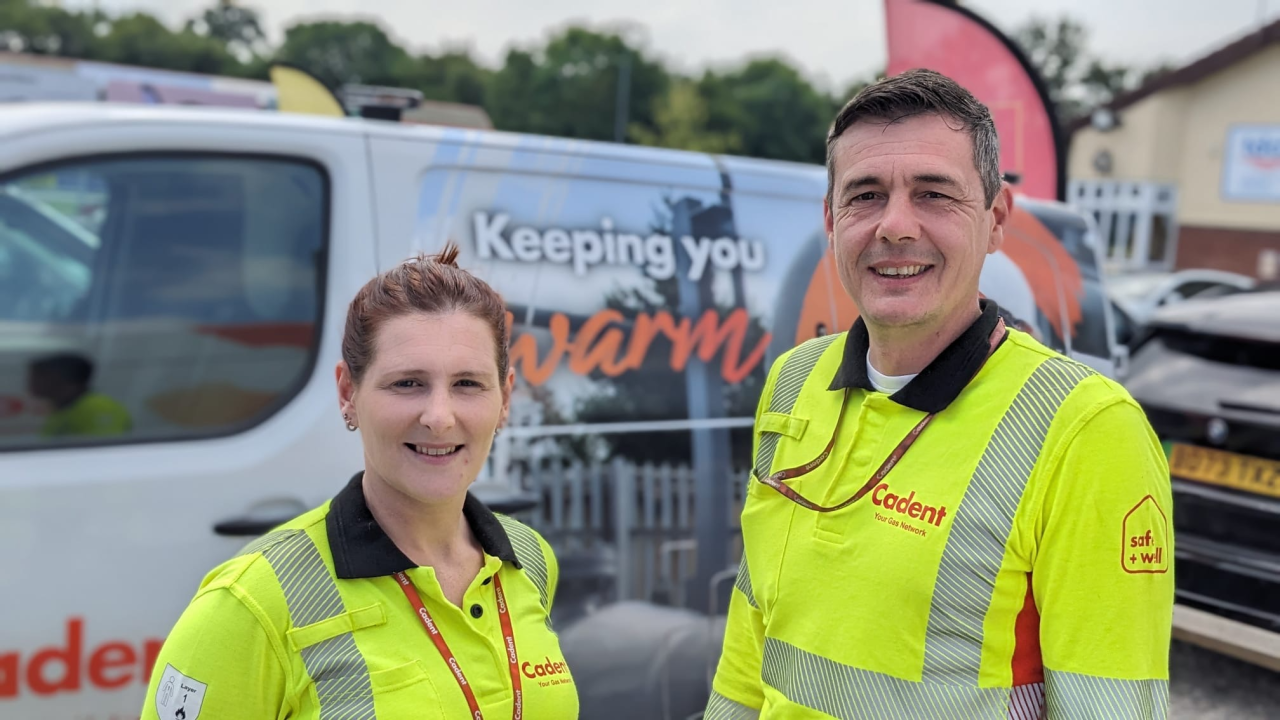
Following a major gas main fire in Chester, we prioritised safe restoration, customer care and continuous updates — and were humbled by the community’s support and positive feedback.

A report by Verve that looks at attitudes towards sustainability and explores to what extent, and why, are consumers change-resistant towards Net Zero in the UK, and how does this compare to Europe?
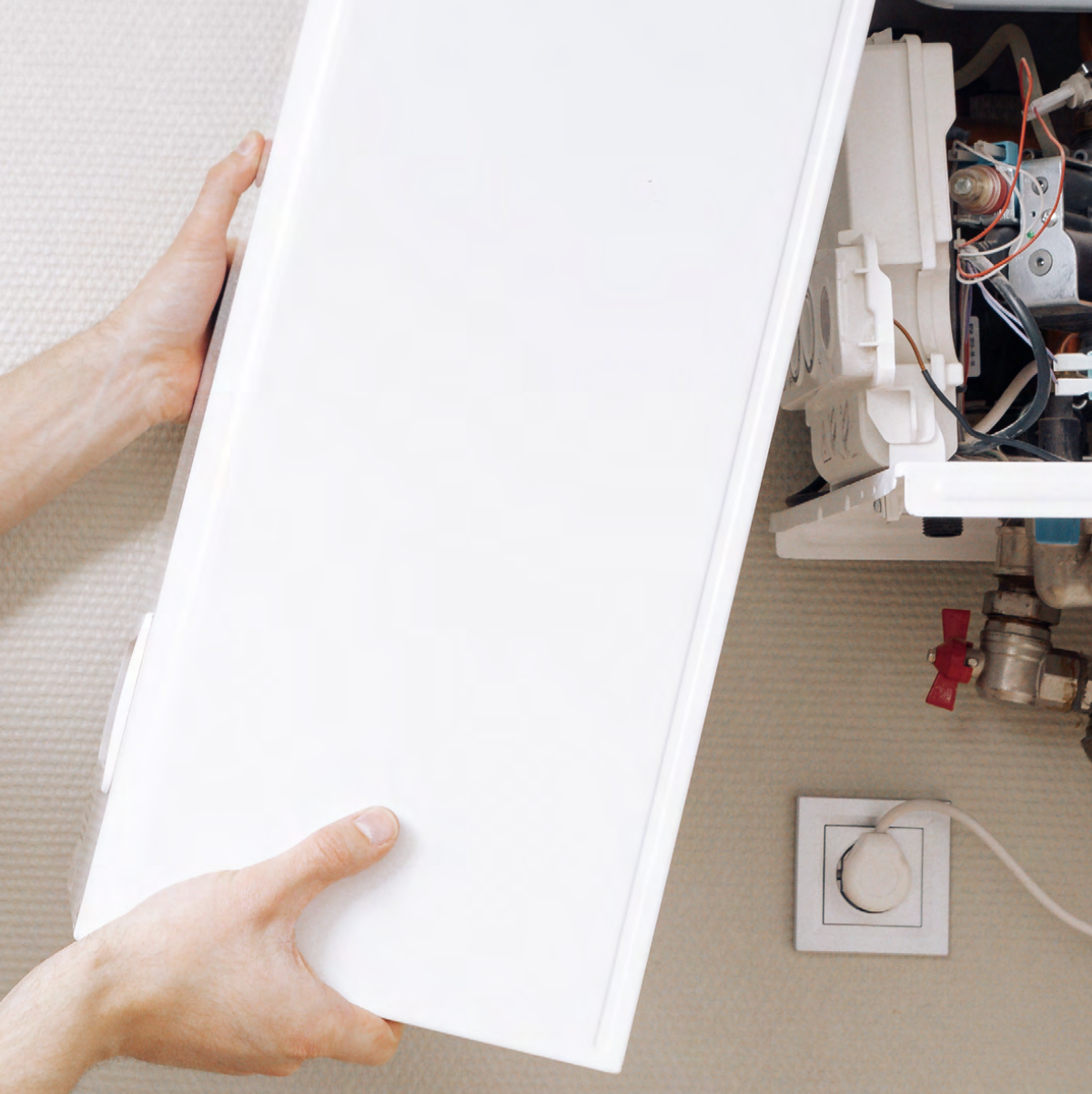
This piece of qualitative research, carried out by Savanta, looks at the public’s view of the technological options that could be used in the future for domestic heating.
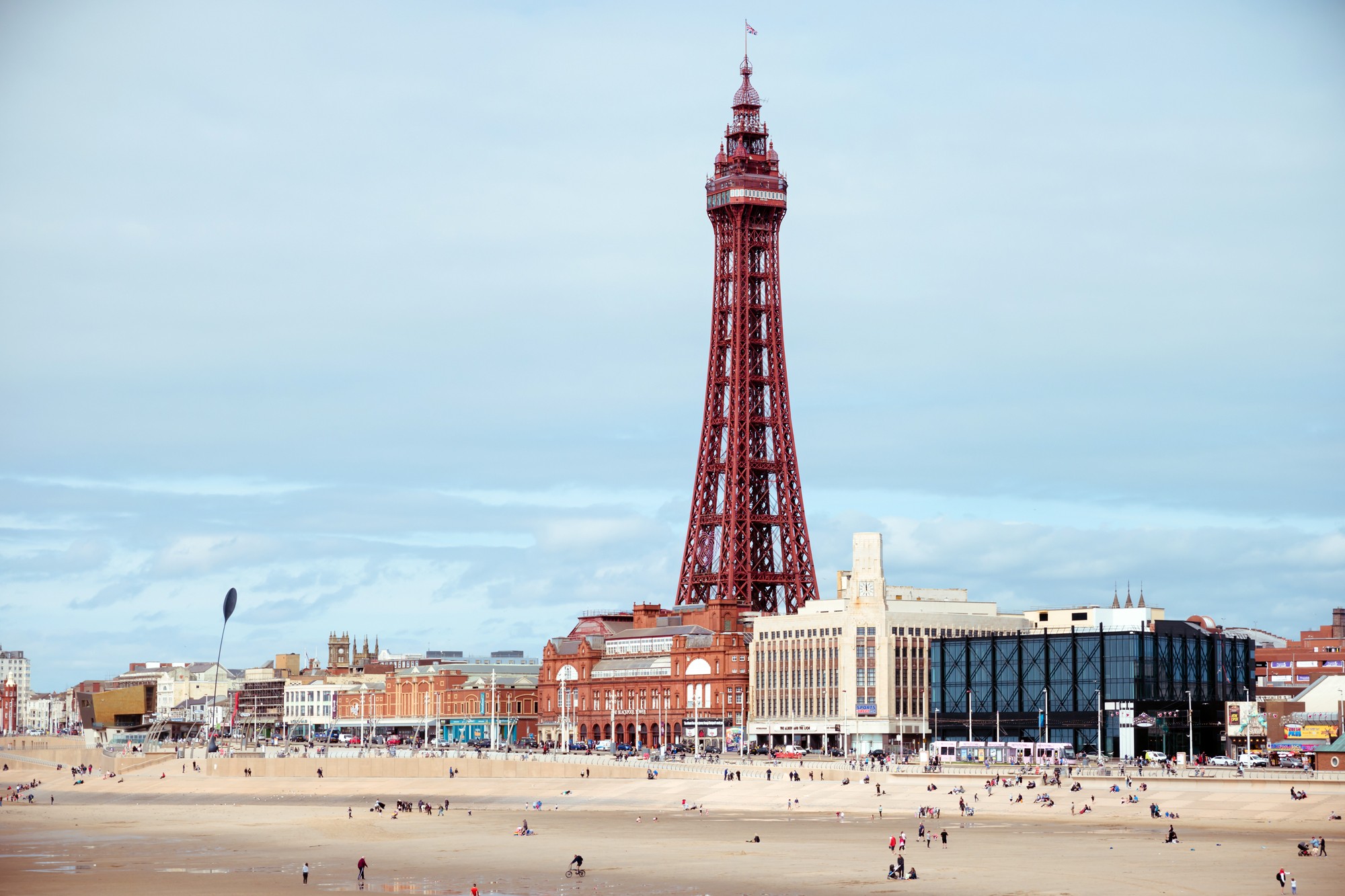
This report by researchers at Cranfield University explores consumer attitudes towards domestic cooking and heating technologies, as well as energy appliances of the future, and looks at the potential role for hydrogen hobs and boilers to be used in UK homes.
This report by researchers at Cranfield University gauges public perceptions of blue and green hydrogen’s potential future use and asks if a twin-track approach is compatible with overall hydrogen acceptance.
Share article:


Or copy this link: