

Cadent has taken a major step towards removing one of the biggest obstacles facing developers of biomethane – the high cost of reinforcing the gas network – by introducing the UK’s first cost-sharing model for entry connections capacity.
The UK’s largest gas distribution network, which wants to facilitate a five-fold increase in biomethane entering its pipelines over the next decade, has confirmed a new network charging approach with its regulator Ofgem.
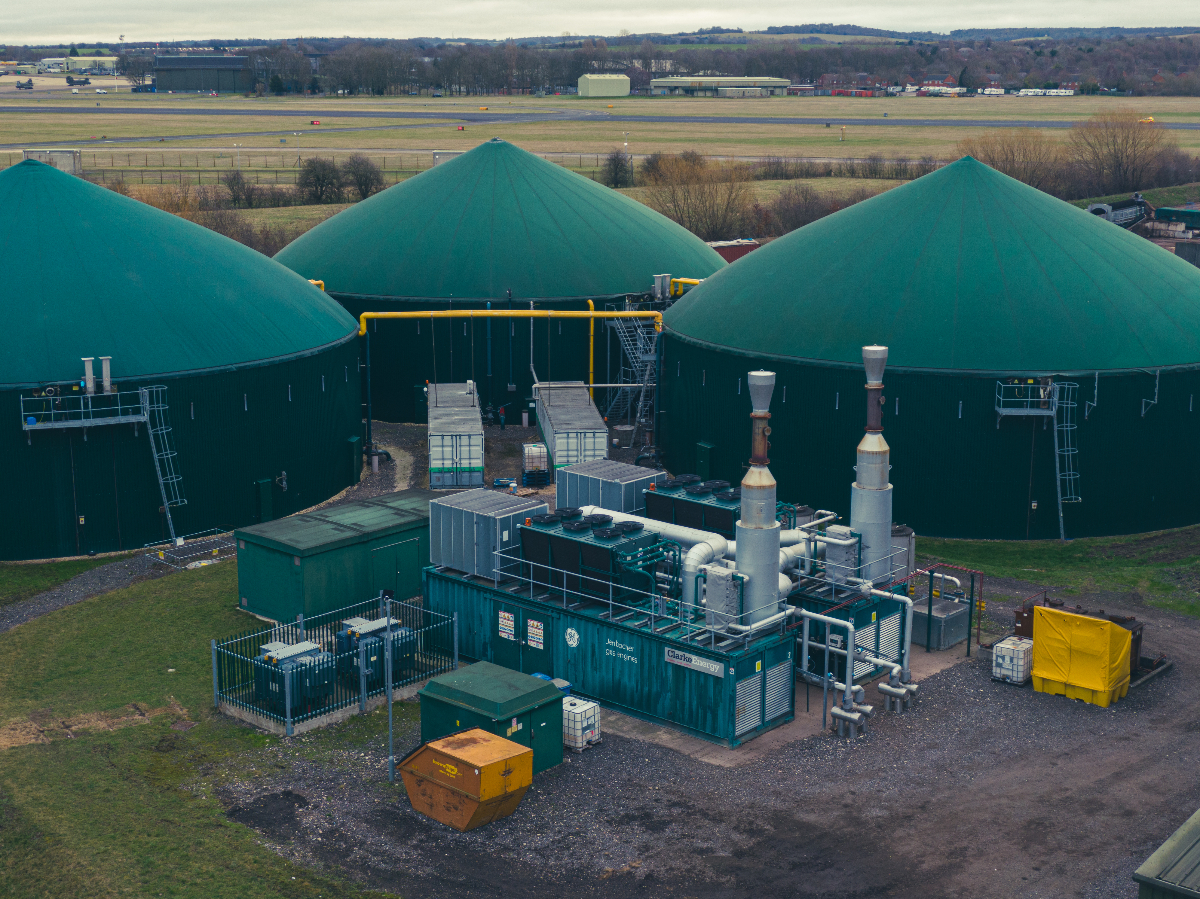
In areas of the country where network capacity is constrained, the new model will make reinforcement more affordable and accessible. Where a group of customers (developers) are competing for the same capacity, and where required, the new ‘cluster’ model allows for the high costs of reinforcing the gas network to be shared, by developers and across the wider customer base.
To support the shift, Cadent has opened a two-month ‘Entry Reinforcement Assessment Window’, giving biomethane developers the opportunity to submit connection projects which require reinforcement that could benefit from the new cost-sharing approach. This is open until 6 March.
Growth in biomethane is essential to achieving a balanced, sustainable approach to the UK meeting net zero and its future energy needs.
Produced from organic waste streams – such as food, manure, waste water and other feedstocks – biomethane today contributes around 7TWh to the UK’s energy supply. More than half (4TWh) is connected into the four networks that Cadent manages, which is equivalent to 351,000 homes heated.
Cadent is aiming to significantly increase this, reaching 20TWh in its four networks by 2035 (equivalent to 1.7 million homes heated).
Current biomethane producers range from individual landowners installing a plant on their farm, to large multinational developers managing portfolios of sites. Both existing biomethane producers seeking to expand, and entirely new sites, can benefit from this new network charging arrangement and ‘clustering’ approach.
first‑connector pays
Until now, where network capacity is constrained, the first biomethane developer triggering a reinforcement was required to fund the full cost of making it happen, including wider system upgrades. This was a financial barrier that is known to have stalled or even ended many otherwise viable biomethane projects.
Following extensive industry engagement and developer feedback, Ofgem has supported Cadent’s proposal to overhaul these charging arrangements.
The new model reduces the financial burden on individual projects by sharing (socialising) a large proportion of reinforcement costs across the wider customer base, up to a cost cap.
Where clustering is possible, reinforcement costs that exceed the cap can now be shared across developers. This enables multiple biomethane projects in a similar area to come forward in tandem, improving cost efficiency and removing a fundamental market barrier.
These reforms are backed up further by Ofgem’s RIIO‑3 Final Determinations, which confirmed an initial £20 million per network biomethane use‑it‑or‑lose‑it
allowance to support reinforcement. This has a £2 million cap per biomethane connection project.
Howard Forster, Chief Operating Officer, Cadent, said: Biomethane is one of the fastest, most cost‑effective ways to decarbonise heat today. But the industry has been held back by outdated charging rules that placed the entire reinforcement burden on individual developers.
This new process – the first‑of‑its‑kind in our industry – moves away from the ‘first‑connector pays’ principle. It creates a fairer, more customer‑centric path for biomethane projects to connect.
By clustering applications and sharing reinforcement costs, we’re helping unlock the next wave of biomethane growth across our networks.
We’re encouraging developers to put their hat in the ring. Every application gives us a clearer understanding of where biomethane demand is greatest, which in turn strengthens our evidence base in discussions with Ofgem about future funding and support for reinforcement.
By stepping forward and applying now, biomethane developers help shape a more coordinated and cost‑efficient approach to reinforcement that benefits the whole sector.
Where network entry capacity is constrained and reinforcement is required, biomethane developers can submit an application through the dedicated Cadent portal.
Once the application window closes on 6 March, Cadent will assess reinforcement requirements and, where possible, cluster applications in close proximity to each other. Developers will be provided with reinforcement cost estimates within 15 days and can then decide whether to proceed with the reinforcement works and associated costs above the high-cost cap.
Cadent aims to commence reinforcement works with delivery partners by 29 July, with reinforcement constructed in time for the dependent new biomethane connections or expansions to be able to connect at the agreed ‘Gas to Grid’ date.
Reinforcement can be delivered through several technical approaches, including:
Cadent is the UK’s largest gas distribution network with a 200-year legacy. We are in a unique position to build on strong foundations whilst encouraging the curiosity to think differently and the courage to embrace change. Day to day we continue to operate, maintain and innovate the UK’s largest gas network, transporting gas safely and protecting people in an emergency. Our skilled engineers and specialists remain committed to the communities we serve, working day and night to ensure gas reaches 11 million homes from Cumbria to North London and the Welsh Borders to East Anglia, to keep your energy flowing.
Here at Cadent we support the Government’s plans to reach Net Zero by 2050. That means we’re backing the introduction of hydrogen as a low carbon alternative to natural gas for the future. We know people love the controllability of gas and, with our network already in place, it makes sense to switch to the lower carbon alternative offered by hydrogen, which we believe can keep homes and businesses warm for generations to come.
Cadent manages the national gas emergency service free phone line on behalf of the gas industry - 0800 111 999*
Cadent Gas Ltd is owned by a consortium of global investors.
*All calls are recorded and may be monitored.

 0797 069 4897