

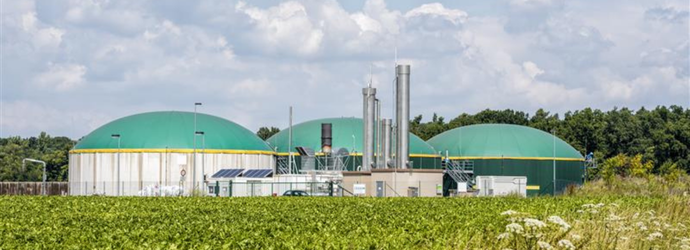
Biomethane is produced by fermenting organic matter, making use of feedstocks ranging from farm and animal waste to food and sewage waste, crops, and silage. The production and injection of biomethane into the gas grid offers a green and sustainable solution to waste management for industrial, commercial, and domestic users.
Growing biomethane connections is an important component of our decarbonisation strategy, alongside hydrogen, hybrid heating schemes and reducing gas leakage. Over the year, we have commissioned one new entry connection, one expansion to an existing site and had another two sites commissioned in February 2025. This will take our total number of entry connections to 47, heating the equivalent of 351,549 homes on an average demand day at maximum injection capacity.
Working with the biomethane producers we are progressing a range of projects to establish how we can greatly increase the amount of biomethane we can connect to the gas network. This includes things like reverse compression that enables more biomethane to enter our network at times of reduced demand; improved commissioning processes; and better utilisation of data for decision making.
We commissioned the first UK compressor to reverse the flow of gas back up the pressure tiers creating capacity and priority for biomethane injection. This is within our South Yorkshire network at Doncaster facilitating the expansion of the Lindholme Anaerobic Digestion plant. Testing of the asset and how it behaves under different operational conditions is ongoing and was completed in March 2025. The Lindholme expansion is a first for Cadent in that it both injects the gas produced on site and has an injection point to bring gas in via road tanker from other sites, maximising the Renewable Heat Incentive (RHI) subsidy.
Last year, we also consulted with our biomethane customers to establish areas for improvement. Our commissioning process came out as one of the top areas to improve and working closely with Future Biogas on their upcoming Gonerby Moor connection, we have implemented a new stage gate process, which we will test over the coming year. Better outcomes for biomethane customers were also achieved through changes to our approach to model data assessments with the development of concept entry reinforcement options, installing and refurbishing low flow meters, understanding the capacity created through ultra sonic meter upgrades and in turn improvements to the quality of data in our models. This was supported with customer insights analysis and the development of a new entry connections process with reinforcement in the offer.