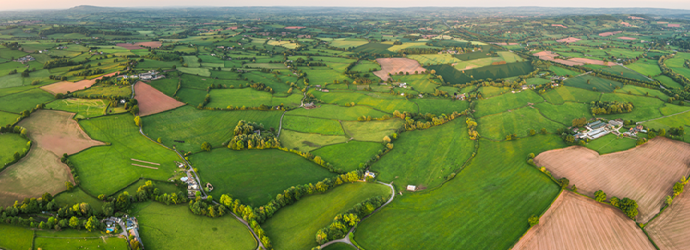
Green fields and farmland seen from above, with hedgerows, country roads and scattered farm buildings

    Biomethane: an opportunity for farmers

    Generate new income, improve sustainability and explore biomethane opportunities on your farm.

    Biomethane can give farmers the opportunity to generate new income, make better use of farm resources and support a lower-carbon future. Produced through anaerobic digestion (AD), biomethane turns organic materials such as crops, slurry and manure into renewable gas that can be injected directly into the existing gas network.

    Why biomethane?

    Biomethane projects can provide long-term, reliable revenue through land leases, feedstock supply agreements or participation in an anaerobic digestion scheme.

    • Diversify farm income through land leases, feedstock supply agreements and renewable energy opportunities
    • Turn waste into value by converting slurry and manure into renewable gas and nutrient-rich biofertiliser.
    • Crop rotation including break crops, such as maize, can add variety to rotations, helping manage weeds, pests and disease.
    • Support soil health with digestate that can help improve nutrient availability and reduce reliance on manufactured fertilisers.
    • On-farm biogas plants can provide reliable, renewable energy, as well as helping farmers to become net-zero carbon emitters.
    • Strengthen energy security as homegrown renewable gas reduces reliance on imported energy and helps create a more resilient energy system for the UK.

    Is your farm suitable?

    Every site is different, but some of the key factors that can support a successful biomethane project include:

    • Access to suitable feedstocks such as slurry, manure or energy crops either alone or in partnership with neighbouring farms.
    • Demand for digestate as a biofertiliser, either on your own land or on neighbouring farms.
    • Good site access for vehicles and operations to allow the delivery of feedstock (where required).
    • Proximity to the gas network, the closer the better but ideally not far from a gas pipeline.

    There are no hard rules on these criteria, and different operating models such as tankering gas to a remote injection point, allows for further flexibility.

    We're here to help

    As a regulated gas distribution network, we do not develop biomethane plants directly but if you're exploring biomethane opportunities, we can provide a free initial assessment to help you understand your proximity to the gas network and available network capacity.

    We can also connect you with experienced biomethane developers and help you take the next steps.

    For more information, contact the biomethane team at [email protected].

    Production
    Go to current incident
    0!

    Incidents

    Telephone Icon - Contact Us

    Smell Gas?

    *
    Aa Accessibility